

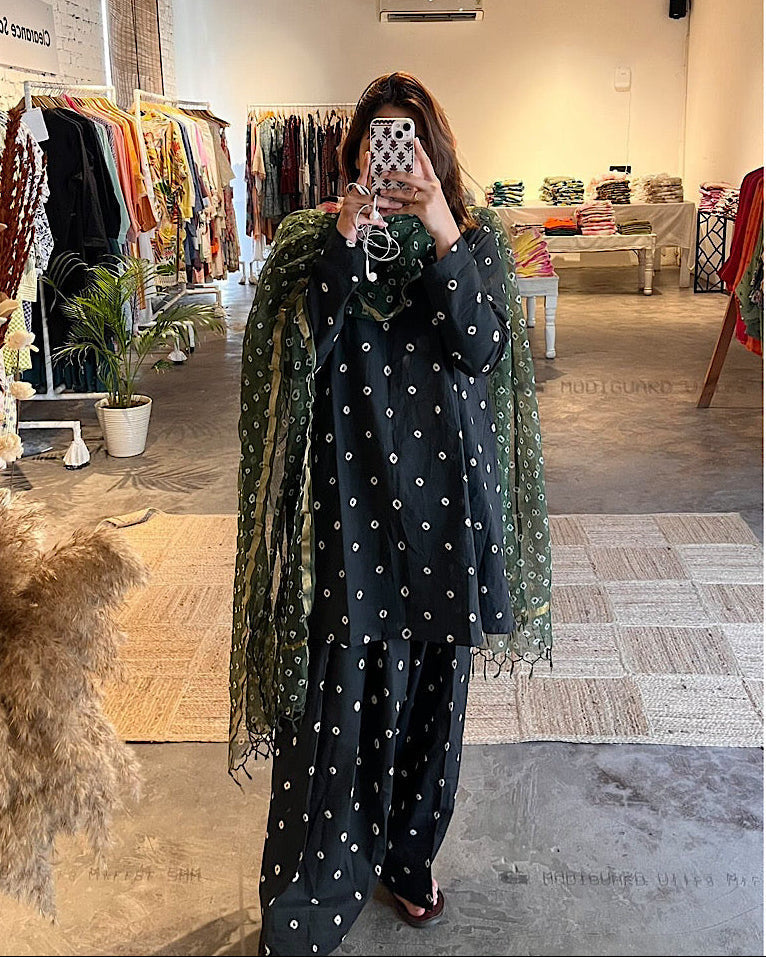
Bandhni Explained: The Tie-Dye Tradition Behind Our Farshi Sets
Bandhni is one of the most labor-intensive techniques in our collection, and also one of the most rewarding to wear. The word comes from the Sanskrit "bandhna," meaning "to tie," and that's exactly what the process involves: thousands of tiny knots tied by hand into fabric before it's dipped in dye.
The process
An artisan pinches small sections of cotton fabric and ties each one off with thread, creating a resist pattern. When the fabric is dyed, the tied sections stay the original color while the rest takes on the new shade. Once the threads are removed, the fabric is left with a pattern of small, irregular dots — no two bandhni pieces are ever identical.
Why our bandhni farshi sets take time
A single dupatta or kameez length can involve tying hundreds or thousands of individual knots, all done by hand. This is why bandhni pieces, like our black bandhni farshi or indigo bandhni farshi sets, carry a texture and depth that printed patterns can't replicate.
Styling tip
Bandhni pairs naturally with solid-colored dupattas or kota doria — let the tie-dye pattern be the statement piece of your outfit.
Discover our full range of hand-tied bandhni kameez and farshi sets.