

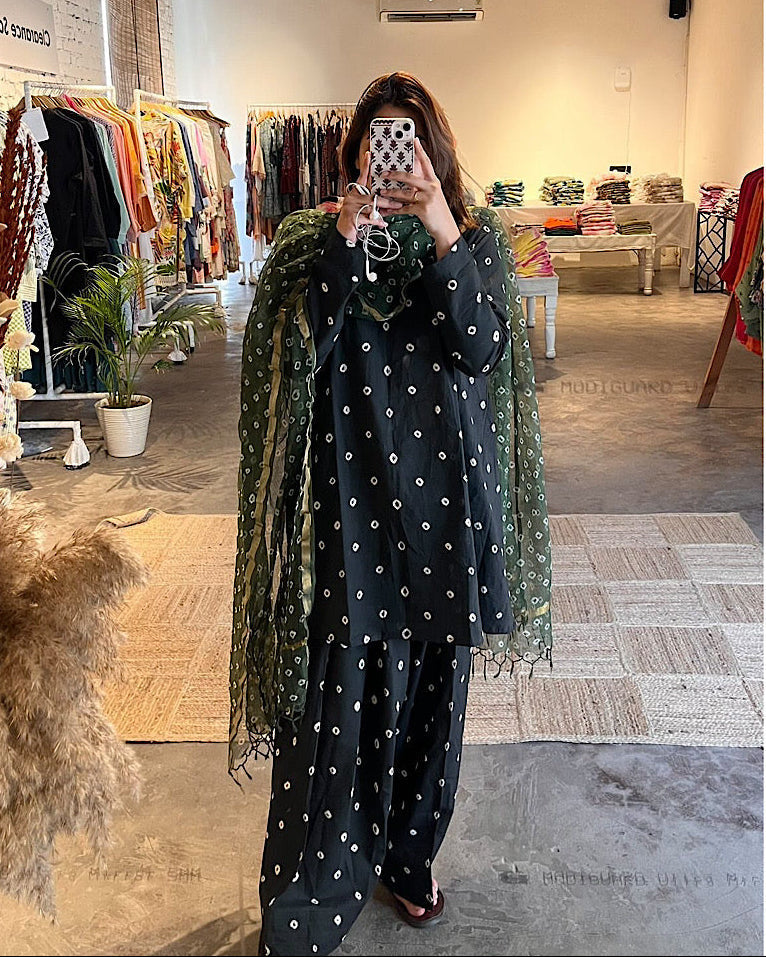
Indigo and Natural Dyes: The Colors Behind Our Bandhni
Before a single block hits the fabric, there's a dye. Every hand block printed and bandhni piece in our collection starts as a color mixed by hand, often from natural or mineral-based sources rather than synthetic pigment alone.
Indigo: the deepest of our dyes
Indigo dyeing is an oxidation process — fabric dipped into the vat comes out green-yellow and only turns blue as it reacts with air. Multiple dips build up depth of color, which is why deep indigo pieces take longer to dye than lighter shades.
Why natural dyes vary slightly
Because natural and hand-mixed dyes respond to water, temperature, and fabric absorption slightly differently each time, no two dye lots are perfectly identical. A black bandhni piece from one batch may sit a shade warmer or cooler than another — this is a mark of hand-dyeing, not an inconsistency to avoid.
How this affects bandhni specifically
In bandhni, the tied sections resist dye entirely, staying the base fabric color while everything else takes on the new shade. This means the contrast in a bandhni piece depends both on how tightly each knot was tied and how long the fabric sat in the dye.
Caring for hand-dyed pieces
Because the color is dye-based rather than printed on the surface, hand-dyed pieces should always be washed separately in cold water for the first several washes to avoid any color transfer.
Explore our indigo and hand-dyed bandhni pieces, each one dyed by hand in small batches.