

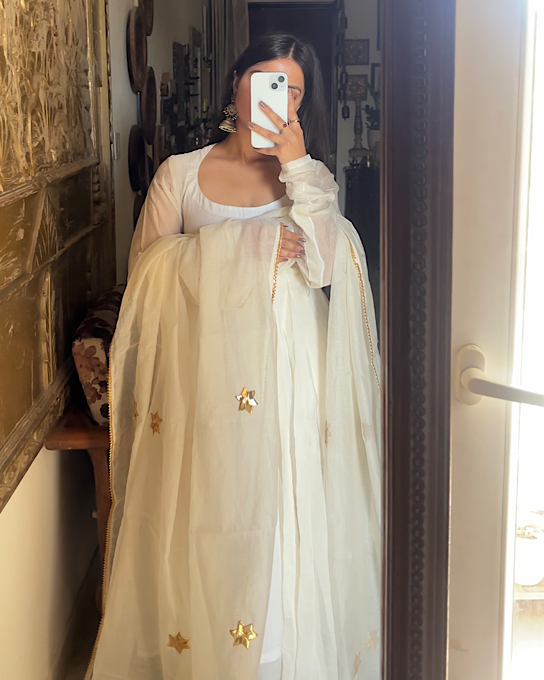
Chanderi Fabric: The Weave Behind India's Most Luminous Textile
Chanderi is one of those fabrics you can usually recognize before you're told what it is — a soft, almost translucent sheen that catches light differently than plain cotton or silk. It's woven in the small town of Chanderi in Madhya Pradesh, using a technique that dates back centuries.
What makes chanderi unique
Traditional chanderi is woven with a blend of cotton and silk (or sometimes cotton alone), using extremely fine yarn. The weave is deliberately sheer and lightweight, which is why chanderi anarkalis and dupattas drape rather than hold structure — they move with the body instead of against it.
The sheen isn't a finish, it's the weave
Unlike fabrics that get their shine from a chemical or mechanical finish, chanderi's characteristic glow comes from how tightly and finely the yarn is woven. That's part of why genuine chanderi feels different to the touch than a synthetic imitation — it's lighter, and the texture is slightly crisp rather than slippery.
How we use it
We pair chanderi with hand block printing and gota patti detailing, since the fabric's natural sheen gives printed patterns a subtle depth they don't have on plain cotton. It's best suited to dupattas and anarkali sets meant for festive or semi-formal occasions rather than everyday wear.
Browse our chanderi dupattas and anarkali sets to see the weave in person.